
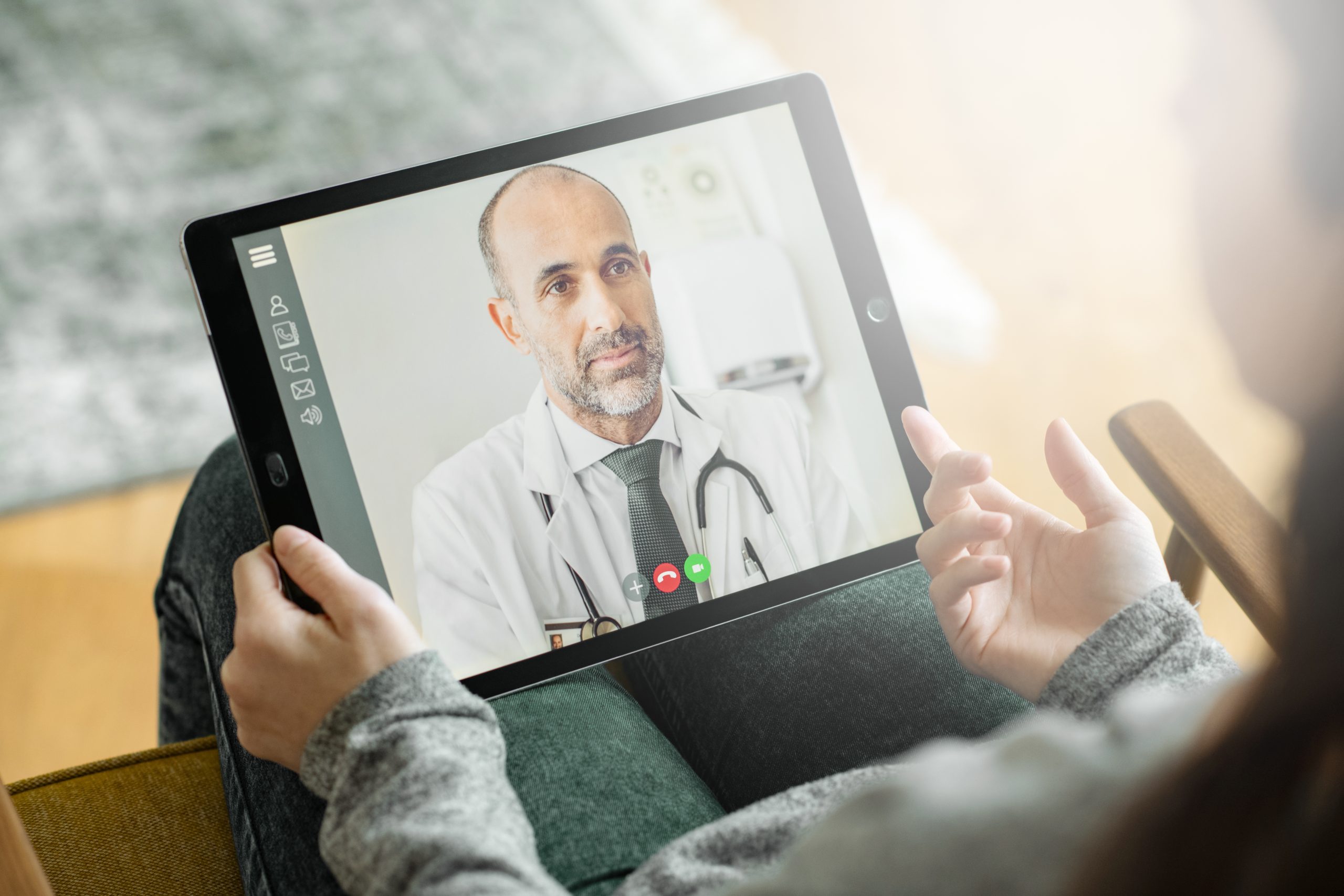

Since the onset of the COVID-19 pandemic, the sustainability of telemedicine has been widely covered by the media and academic journals, as the pandemic accelerated the implementation and adoption of remote consultation. Telemedicine provides innovative ways to maintain consultations without requiring physical proximity and helps to manage waiting lists.
Today, depending on the discipline, some facilities estimate that about 40% of medical appointments can now take place remotely, by phone or teleconference. In various articles, doctors report that a significant portion of patient appointments now result from teleconsultation – sometimes 25% or more. In contrast, the teleconsultation rate for most of these physicians was at zero prior to the pandemic. This is an upward trend that appears to be continuous and sustainable.
The general public is less aware of the administrative and operational implications of this shift and the additional burden on appointment centres. However, there are several digital management tools to streamline clinical operations.
Tool Integration to Support Telemedicine
There are various tools to support this digital shift. Tools like Teams or Reacts are often used by physicians and professionals to monitor patients’ health remotely. However, these tools are not integrated with the appointment management platforms used by healthcare facilities and, as a result, increase the administrative burden on support teams.
The integration of telemedicine platforms with appointment management tools is a way to optimize time and streamline tasks for already overworked administrative agents. This integration allows for better coordination, avoids double entry of information in the systems, and reduces errors or oversights when an appointment must be cancelled or moved.
Thanks to the integration between the Appointment Management module of Lumevi Hospital Information System (eClinibase) and telemedicine tools such as Teams or Reacts, hospital staff have access to a complete overview of all appointments, making it easier to track patients through their care trajectory. The statistics integrated into the process provide business intelligence that leads to a clear picture of performance for the management team.
This has no impact on virtual appointments between doctors and their patients, who will proceed as usual with the chosen platform.
Communications to Patients Before Appointments
In the healthcare sector, the appointment centre team is also responsible for communicating to patients in advance of a medical appointment. When hundreds of appointments must be managed each day, this task can quickly become cumbersome and tedious.
With the Automated Communication functionality in the Appointments Management module of Lumevi Hospital Information System, all the required information can be automatically communicated to patients — appointment confirmation, procedures to follow, or other necessary information.
These automated communications can be done through a robocall, email, or text message, depending on the need or choice of the individuals involved.
Discover Lumevi Hospital Information System
A 360-degree platform of interconnected modules that streamline clinical and administrative processes surrounding the care and service trajectories.
Recording Clinical Information During Teleconsultations
As with face-to-face medical appointments, during teleconsultation, physicians complete clinical forms and take notes to document their medical follow-up, so that it can be recorded in the patient’s file. These notes are often taken on paper forms. However, in a setting where physicians are not physically present at their healthcare facility, this poses a problem for charting and inhibits access by other care providers. Why couldn’t these notes be taken on a digital medium?
Using Lumevi Electronic Document Management (EDM), a centralized platform for creating intelligent forms and managing the clinical information workflow, physicians and care providers can record consultation notes within an electronic clinical documentation tool. These electronic documents can be immediately integrated into the facility’s electronic health record (EHR). This solution supports mobility, eliminates the need to scan documents and avoids potential information loss. But most importantly, it allows information to be quickly available in patient records.
Discover Lumevi Electronic Document Management
A centralized platform for intelligent forms management and clinical workflow optimization that increases operational efficiency and improves patient care.
